For Leaders · The Executive Intensive
The Think Hawaiian executive intensive. A demanding two- to three-day engagement for intact executive teams ready to do the inward work of leadership — and operate as the council they were always meant to be.
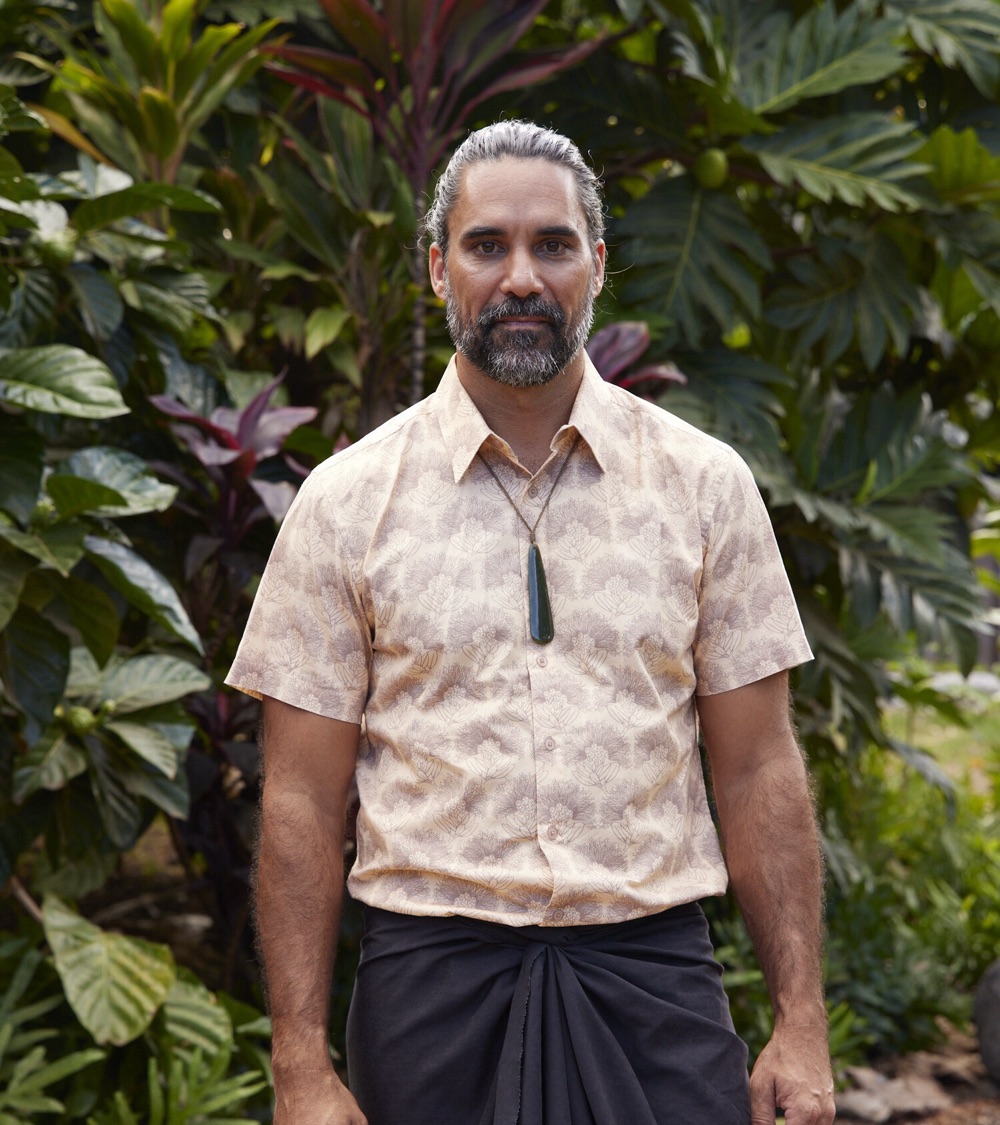
Leadership is a kuleana. Both a burden and a privilege.
Most executive leadership development teaches frameworks — decision models, alignment exercises. They are useful. They are not enough. The hardest work of senior leadership is not strategic. It is internal.
Most executive teams meet often, decide quickly, execute well — and never actually meet each other. They have functioned as a council without ever being one.
For Leaders is built on a different premise. Leadership is a kuleana — a burden and a privilege held in one word — and it is bearable only because you carry it with others.
In order. Each practiced, not taught.
For Leaders is built on three movements, in order. Each is multi-hour, deeply integrated, and designed to be practiced. The team isn't there to learn — they're there to be put through something.
The reckoning. Each leader faces themselves before they can face anyone else. The hardest movement, deliberately first.
The reckoningThe team works on itself as a unit. ʻAha carries two meanings — the gathering, and the rope that holds. A council without cordage is just a meeting.
The bindingWhat the team owes outward — what they will carry, together, into the organization and the future they are building.
The wayPractice, integration, and ceremony. The Multi-Day format culminates in a closing ʻAwa ceremony — a binding of the council the team has just become.
Three things made real in the room.
Shared kuleana, openly held
Each leader names a piece of what they've been carrying, and the council takes it on with them. The weight redistributes. The privilege is shared.
The capacity to disagree without fracturing
Teams that have walked through ʻAha can argue, decide, and move forward — because the cordage between them is in the open.
A way of operating as a council, not a meeting
The difference between a team that gathers and a team that is a council is invisible from outside the room and obvious from inside it.
Intact executive teams — CEO and direct reports, operating as a unit.
Eight to twelve people in the room. The CEO is present and participating throughout. There is no version of this workshop where the CEO sends the team to be developed.
- New CEOs inheriting a team that needs to be reset
- Established teams that have grown apart — surface alignment, no underlying council
- Teams in post-disruption rebuild — reorganization, M&A, public failure
- Founder-led companies transitioning to professional management
- Companies in succession or generational transition
- Teams that know they're not living up to themselves
It's not the right fit for
- Peer cohorts of executives from different organizations
- Teams where one or more members have already mentally disengaged
- Companies looking for inspirational content rather than developmental work
- Engagements where the CEO will not commit to multiple full days in the room
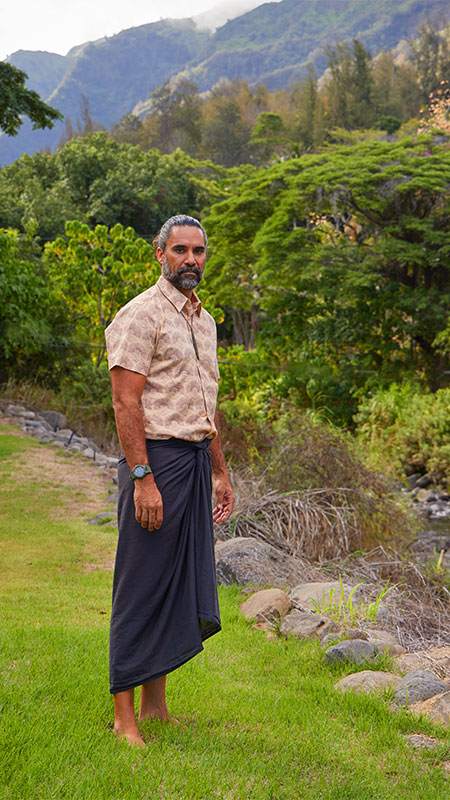
The chief is never alone. They stand on the shoulders of those who came before. The council is beside them.For Leaders is bound by cultural protocol — structural, never decorative.
Protocol that marks this as different.
Wehe — the opening
Every engagement opens with a Wehe led by Kainoa, a deliberate marker that this is not a standard training. The room becomes a different kind of space.
ʻAwa — the closing
The Multi-Day format closes with a shared ʻAwa ceremony — historically used for formal commitments and the binding of relationships. It consecrates the Ala the team has chosen.
If the conditions for proper ʻAwa cannot be met, the Multi-Day format is not booked. The Full-Day format is offered instead.
Three formats. Same arc.
Half-Day
A working session for teams testing whether this is the right work, or needing a focused intervention on one movement. Not a complete engagement.
Full-Day
All three movements at minimum viable depth. Real, but compressed. The right choice when calendar constraints prevent multi-day.
Multi-Day
Each movement gets the time it requires. Closes with the ʻAwa ceremony. The version that produces what the workshop is built to produce.
Pricing available on inquiry. Includes pre-work, scoping conversations with the CEO and executive sponsor, facilitation by Kainoa Horcajo, all cultural protocol, the ʻApu hōʻokupu (Multi-Day), and follow-up engagement.
that can
be filled
In Multi-Day For Leaders, each member of the executive team receives an ʻApu — a coconut cup used only for ʻAwa — passed through them in the closing ceremony.
The ʻApu carries the empty-cup symbolism that runs through the workshop. A leader who can be filled is a leader who has done the inward work. It sits on the executive's shelf as a reminder of what they walked into, and what they walked back out as.
After the intensive: Consulting.
Some executive teams want a strategist in the room after the work is done. Through Moʻolelo Group, Kainoa advises leaders on strategic communications, community and government relations, and cultural decisions with real stakes.
Ready to do the inward work?
For Leaders engagements are limited and book six to twelve months out. Initial conversations are with the CEO directly. If your executive team has been functioning without ever truly being a council — let's talk.